Pollen and dust might seem harmless, but in Michigan’s seasonal climate they’re two of the biggest threats to solar panel efficiency. They form a thin, sticky layer that blocks sunlight, traps moisture, and slowly erodes panel coatings. Whether you have rooftop panels in Troy or a ground-mounted system near Saginaw, these invisible layers can quietly reduce output by up to 25 percent.
To keep your panels producing at full capacity, schedule regular Residential Solar Cleaning or Commercial Solar Cleaning with Solar Shine Michigan.
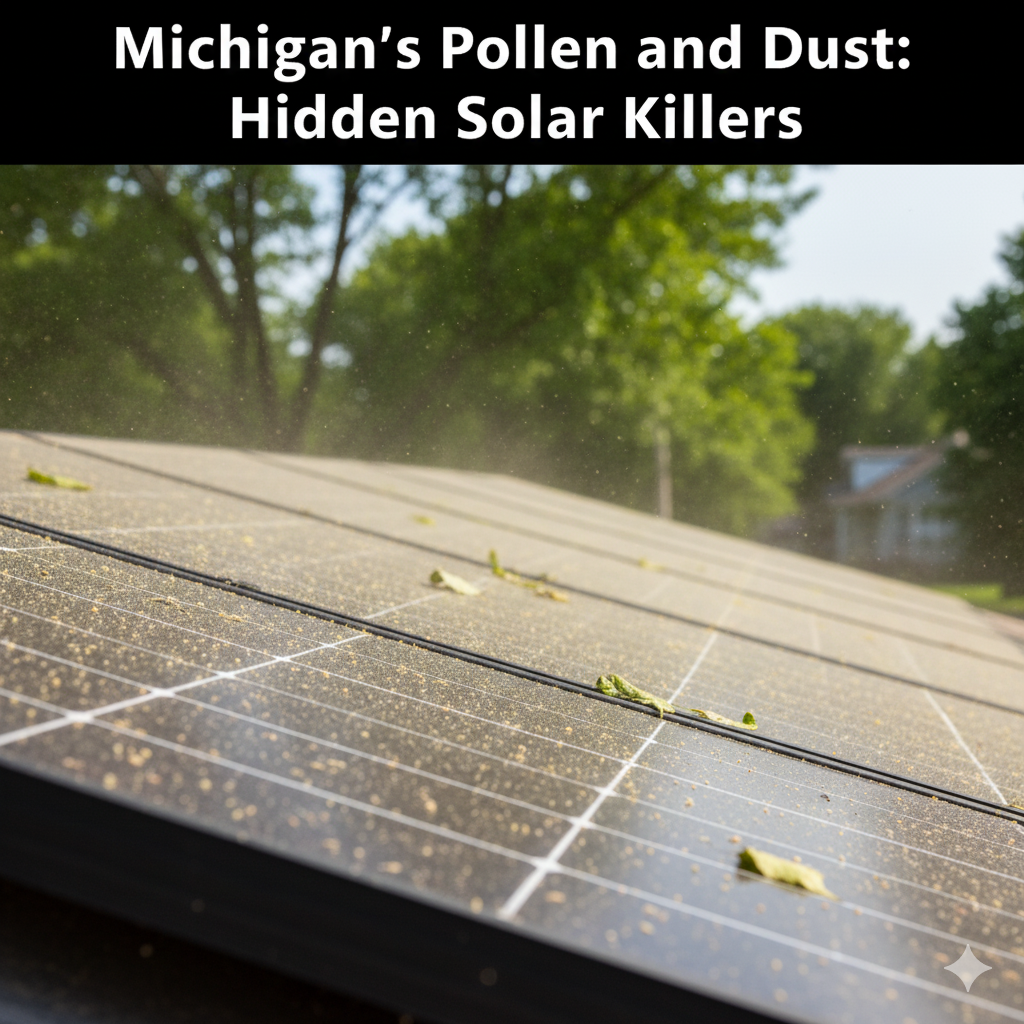
How Pollen Affects Solar Panels
Each spring, Michigan’s trees and plants release millions of microscopic pollen grains. When these grains settle on solar panels, they form a sticky film that doesn’t wash off easily with rain.
This layer:
- Blocks direct sunlight
- Traps dirt and pollutants
- Promotes water spotting and residue buildup
Because pollen bonds with dust and moisture, it often requires professional deionized-water cleaning to remove without scratching the surface.
Dust — The Silent Efficiency Thief
Dust is present year-round in Michigan, especially near:
- Construction zones and roadways (Oakland and Genesee Counties)
- Agricultural areas (Saginaw, Lapeer, and Shiawassee Counties)
- Lakeshore properties (Bay County)
When mixed with pollen or humidity, dust cakes onto the glass and diffuses sunlight. Even light coverage can reduce system output and increase inverter strain.
The Science of Power Loss
Solar panels rely on unbroken light transmission. A thin film of pollen and dust can scatter and refract sunlight, forcing panels to work less efficiently.
Testing shows:
- Light dust = 3–5% production loss
- Pollen film = 10–15% loss
- Combined residue = 20–25% loss
That’s equivalent to losing one or two months of free solar energy every year if panels aren’t cleaned.
Why Michigan Panels Are Especially Vulnerable
Michigan’s climate adds three risk factors:
- High humidity – moisture binds pollen and dust to glass
- Seasonal temperature swings – bake residue onto surfaces
- Tree cover – constant pollen and sap in suburban areas
These combined elements make twice-yearly cleaning essential for consistent efficiency.
Learn more about our statewide service coverage on the Michigan Solar Cleaning Page.
DIY Cleaning vs Professional Service
Rinsing panels might look effective, but Michigan tap water leaves mineral deposits that scatter light.
Professional services use:
- Deionized water for spotless rinsing
- Soft brushes for protective coatings
- Safety gear for multi-story rooftops
Hiring experts prevents micro-scratches that reduce output and protects manufacturer warranties.
Best Times to Clean in Michigan
| Season | Reason |
|---|---|
| Spring | Heavy pollen and sap buildup |
| Late Summer | Dust, bird droppings, and insect residue |
| After Harvest Season | Agricultural dust in rural counties |
| After Construction or Roofing Work | Cement dust and debris |
For most systems, a spring and late-summer cleaning schedule provides optimal year-round performance.
Frequently Asked Questions
Does rain remove pollen and dust?
No. Rain spreads residue and leaves mineral spots that reduce panel clarity.
Why is pollen worse in Michigan?
Michigan’s long spring bloom, mixed with humidity, causes heavier pollen bonding than in drier states.
Can cleaning improve performance immediately?
Yes. Most homeowners see visible reflection and output gains the same day.
Protect Your Panels from Hidden Solar Killers
Pollen and dust buildup quietly drain your solar production. Regular cleaning restores clarity, improves energy output, and prevents long-term damage.
Request a Free Quote today from Solar Shine Michigan, your trusted solar cleaning specialists.