Solar panels are designed to operate quietly and efficiently, but performance can drop fast when they get dirty. Michigan’s mix of pollen, dust, and road salt makes regular cleaning essential for maintaining power output. Here are the five most common signs your solar panels need cleaning — and what to do about it.
If you’re unsure where to start, schedule a Residential Solar Cleaning or Commercial Solar Cleaning with Solar Shine Michigan.
1. Drop in Power Output
A sudden decrease in your system’s energy production is the clearest warning sign. If you track your solar output using an app or inverter display and notice a consistent dip, buildup on the panels is usually the cause.
A light layer of dust or pollen can block 10–20 percent of sunlight, while heavy buildup can cut production by 25 percent or more. Regular cleaning keeps your system generating at its rated capacity.
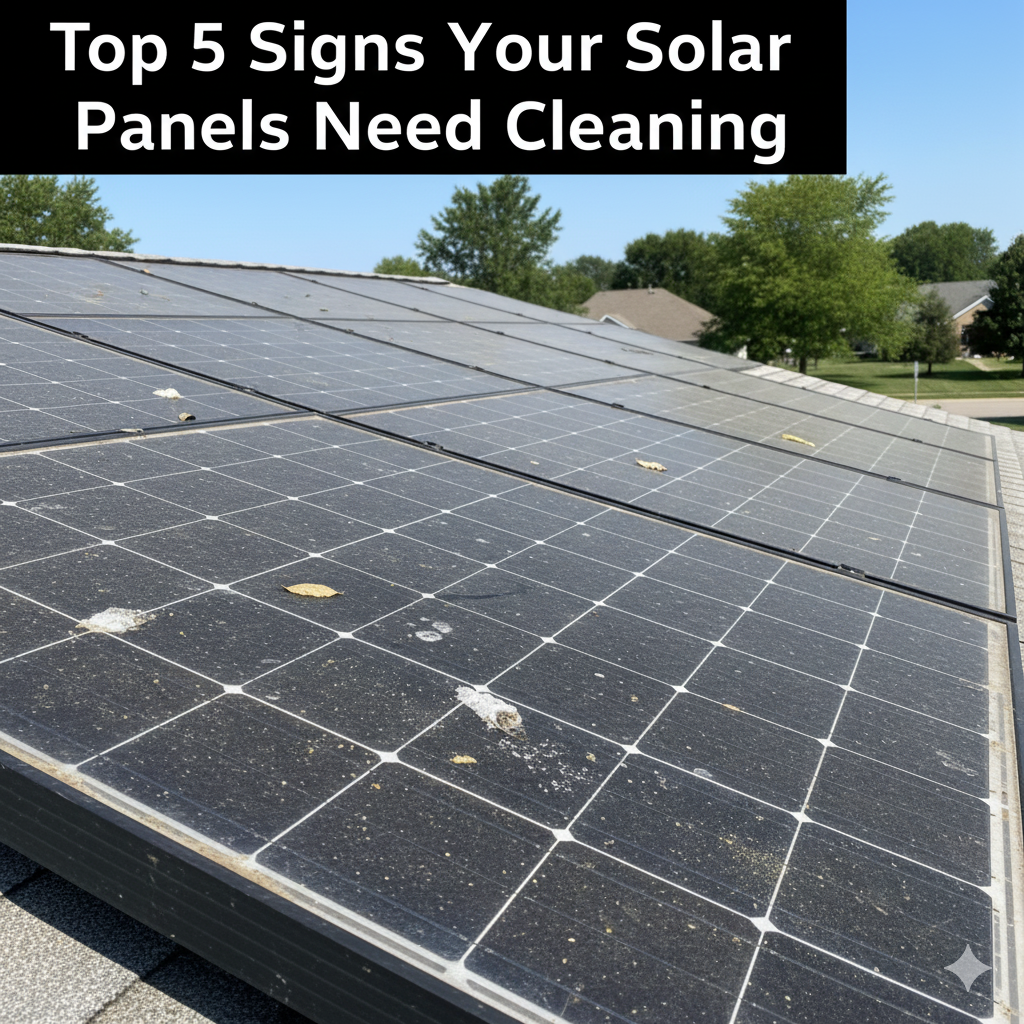
2. Visible Dirt, Dust, or Bird Droppings
If panels look dull or cloudy, they’re overdue for cleaning. Dirt accumulation is most common after pollen-heavy spring months and during dry summer periods. Bird droppings are especially harmful since they block sunlight and can etch into glass if left too long.
Professional cleaners use deionized water and soft brushes to remove these safely without damaging coatings. See details on our Residential Solar Cleaning process.
3. Streaks or Shading in Monitoring App
Many Michigan homeowners use monitoring software that shows real-time performance per panel. When only one or two panels show reduced power, localized dirt or debris is the likely cause. A streak of tree sap, a clump of pollen, or even a single bird dropping can distort readings.
Spot issues early, and you can clean before power loss spreads across the array.
4. Increased Inverter Temperature or System Alerts
When panels are dirty, they produce less current, forcing the inverter to work harder to maintain voltage. This can lead to temperature spikes or efficiency alerts.
If you notice unusual inverter readings or frequent power adjustments, schedule a professional cleaning and inspection to rule out buildup before assuming a hardware fault.
5. Seasonal Weather Effects
Michigan weather adds unique challenges:
- Spring: Pollen and tree debris reduce clarity.
- Summer: Dust and insects collect on flat or low-tilt panels.
- Winter: Road salt and snow film leave residue.
Scheduling a cleaning every six to twelve months — especially after heavy pollen or storms — keeps output stable year-round.
Check our Michigan Service Page for cleaning schedules by region.
DIY Cleaning vs Professional Service
You can rinse panels with a hose, but mineral-rich Michigan water often leaves spots that scatter sunlight. Professional cleaning uses purified, deionized water and non-abrasive brushes that prevent scratches or film buildup.
Hiring experts also ensures rooftop safety and protects manufacturer warranties.
Learn more about our process for Commercial Solar Cleaning and long-term maintenance.
Frequently Asked Questions
Can I tell when my panels are dirty without checking output?
Yes. Dull reflection, bird droppings, or uneven surface shine are visual clues that cleaning is needed.
Is it safe to clean panels myself?
Only from the ground with gentle rinsing. Avoid ladders and pressure washers to prevent damage or injury.
How often should I schedule professional cleaning?
Every 6–12 months for most Michigan homes, or quarterly for commercial systems.
Don’t Let Dirt Drain Your Power
Dirty panels reduce performance, shorten lifespan, and waste your investment.
Schedule professional solar panel cleaning with Solar Shine Michigan to restore full efficiency.
Request a Free Quote today.